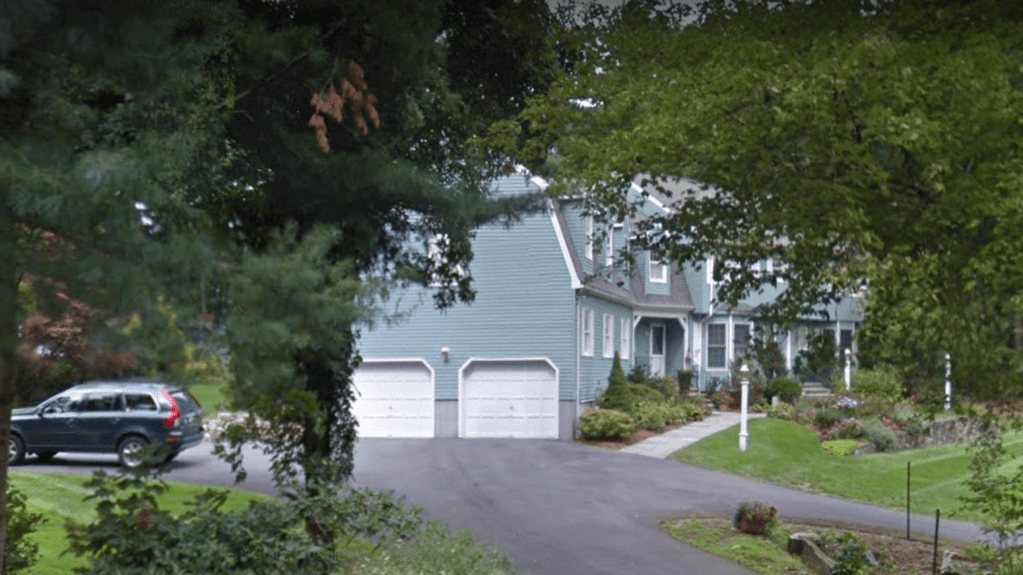
Ours was the blue house on Donnelly.
We weren’t the kind for cucumber & dill.
It was takeout, with Ann’s hours, or fish sticks.
We tried to be good, responsible married folk,
but more nights than not I would
drive home the crinkly bag from Joy Luck
and salivate through the yellow lights
to the blue house with lawn lamps in the falling dark,
banked on either side with yellow buds—
forsythia, from owners prior. Ann loved them
but neglected them,
and still they came back first and brightest,
end of March.
Among our reasons for the move was school,
but then we hadn’t kids to send. Ann, I think, had
regrets. But then I’d whisk her up to see the foliage
and sleep in twin beds with woolly quilts and timber frames.
We found a poem book, once, in the nightstand and
frowned over the lines until we laughed.
Autumn followed us back from Willoughby and then they
dropped, the forsythia, and left behind a wall of reddish leaves.
Responsible red, like curtains on a set, their closure looming.
We’d pick up milk and try to recreate
the waffles. When that failed, the poetry.
The branches bared. English muffins. Snow.
Christmas bears from Michigan and mugs
of cocoa topped with ginger. Ann’s idea, different.
Her mother liked peeled potatoes for New Years
and stepping stones in the garden, gone in snow,
the banks on either side like muttonchops
as winter lopped the heads off our forsythia.
The chimney sweet with cedar and old headlines,
and cold again as pond and railroad thawed,
Ann and I spent twenty years on Donnelly
in sweet smoke and summer fog,
with water damage and widened doors.
The study made a fine bedroom,
and afternoons while Ann would sleep,
and I kept watch from couch and coffee table,
I would trace our movements, stove to den,
thousands repetitions back and forth, and
not once had we thought we’d slow and settle
like cardinals in the frost
until we froze.
That last winter, when Annie passed,
and I could smell her still in coats and shoes,
I traced us one last time, rice and rangoons,
and washed the boxes in the kitchen sink,
myself a shallow shape in the night window,
and keyed my wrists and dyed the basin reckless
as Ann kept watch and waited in the past.
It opens wide and lets us back in death,
so young and timeless we might always have
this place, that otherwise would crumble, fall, exist
only in perishable photographs and sleep.
Stone by stone we make our way,
between the lawn lamps burning golden eggs,
forsythia and chimney cool but sweet-black,
to the blue house that we loved and left in fog.
 K. P. F. Holmes