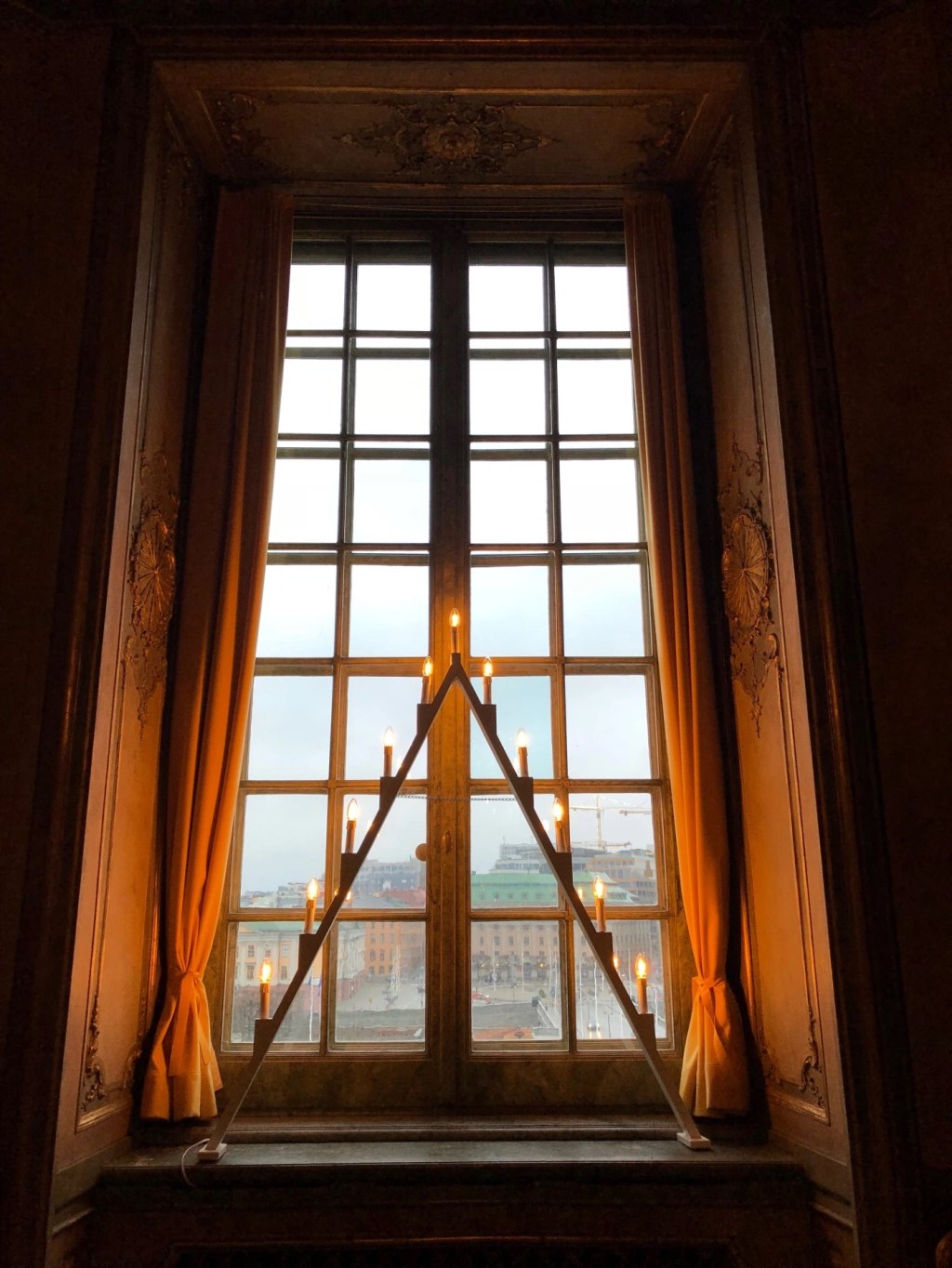
I missed the outdoors. Growing up I took it for granted, cursing whenever the wind ruffed my hair. Now I imagined the smell of ice, the awkward nods on the sidewalk, and the glare of the stoplight on wet pavement from the safety of the windows, without getting too close. I was Mother’s secret, the ghoul she tucked under the dust ruffle when there was company. But that was the hormones talking.
Mother no longer had company over.
She set me up in the room next to hers. It was Christmas break, and I don’t know what I was hoping for when I came skulking home from school in heavy contouring and double Spanx to hide the extra weight in my face and body. I had been so caught up studying for finals that I didn’t think through the obviousness of wearing my winter coat 24/7, which hung together by a herculean feat of Velcro. I wouldn’t have come back and risked upsetting Mother, but she would have spent Christmas alone, with Dad gone and my brother Nigel abroad.
The baggy clothes, the twitchiness, and the unprecedented refusal of her holiday cheeseboard added up quick, although it was the laundry dropoff of December 28 that shook Mother from denial. She barged into my bedroom while I was smoothing cocoa butter over my sixteen-week bump, dropped the pile of clean towels she was carrying, and drove off. She returned with enough diapers and onesies to outfit a royal nursery, and we had a talk.
Mother said it was best that I take off school until after the birth. Then I could return to campus in proper shape while Mother took care of the baby and I finished my degree. The pregnancy wouldn’t haunt my reputation or job prospects, allowing me some of the youth and pride that I had so irresponsibly thrown away.
Mother anticipated my needs. She put out lavender candles to appease my heightened sense of smell. She kept plenty of pineapple in the fridge. Although I wasn’t close to halfway, she replaced my chair at the dining table with a birthing ball. And, since my navel started to jut and stripe, she bought me a maternity belt so that I could disperse the baby’s weight and have a prayer of recovering my figure when this was all over. The belt restricted my movement and looked ridiculous, but she liked to see it on me and feel helpful. Watching the baby squirm and expand, she upgraded to a heavy-duty girdle with pelvic straps that looked stiff and foreboding as a medieval chastity belt—laughably overdue, in my case. Maybe the third trimester would bring scaffolding.
While all her fuss mortified me to the roots of my hair, I had to appreciate her intentions. She wanted me to be comfortable, and part of that was sparing the awkwardness of going back to college—she told my advisor I was concussed out of commission—or going outside. My town friends went back to school, but you never knew who might pop in for the weekend or whose gossiping mother would be lying in wait for a compromising story. Mother was right. If they discovered me at the convenience store, with an empire waistline and a basketful of pickles, I would spiral into prenatal depression and curl up on the floor, only to get stuck until a forklift saved me from myself.
You’ll thank me in the end, she told me. I wasn’t sure about the melodramatics she envisioned, but, then again, I’d never been pregnant before. Mother had been. It would be irresponsible to refuse her expertise.
Alone in the apartment, forging purpose in busywork, I regressed to childhood hobbies. I drew landscapes, mooning over country fields and tossed oceans, and experimented with all sorts of media to dirty my hands and make me feel adventurous. I wanted to go out, even for a drive.
Our only excursions were my three-week checkups. I would get all excited to be measured and fingered and stuck with needles, and if I sat in the backseat, Mother would treat me to a milkshake at the drive-through. One time the parking lot was empty, and she let down my window. The air smelled of gas and fries, and it was divine. I asked her why she was being so nice.
“I’ll tell you, Lauren,” she said, twisting around the driver’s seat and laying her hand on my belly. Her engagement ring shot red and green flakes all over the car. “There isn’t a thing you won’t do for your child.”
My belly flinched and rippled.
We left Henry out of it. Mother explained that if I loved him I had to allow him the life he deserved. She was impressed to learn that he was a Finance Major and had two internships under his belt. Resume aside, he was my best friend at school. He had the three essential humors—the humor to make me laugh, the humor to laugh at my jokes, and the humor to laugh at himself. I didn’t like lying to him. He texted every day to ask how I was and to fill me in on the quirks of our Accounting professor and the humiliations of the fraternity pledges.
He said he wanted to visit.
Mother thought it through. Henry was the kind of guy to drop everything and marry me at the courthouse, rent a shoebox by the hardware store, and flip burgers at the failure of all other prospects in order to support us. He would bald fast, go young into crisis, and despise me for speeding him into middle-aged mediocrity. Then he would be the whale in house slippers.
I couldn’t do that to Henry. We would keep him out of it, though secretly I imagined the baby growing Henry’s little ears and listening to me talk to myself like Henry would have. It helped with the loneliness.
Mother helped, too. She installed a treadmill with a simulator screen so that I could walk in the woods or the mall or a small town square. The digital people surrounded me without scrutiny, their faces in blank profile. I felt quite comfortable around them. She also rubbed my feet and bought me wrist braces for the joint pain. When the braces got in the way of my drawing, she left off her cocktail rounds to watch movies with me. Those nights on the couch, her hand on my bump, I came to realize how distant we had grown since I went off to school and how much we had missed—how vital this simple mound of flesh.
Over the course of weeks we felt the emergence—the hardness and expressionism—of an unborn personality, incandescent within, a water dragon responsible for the sickness and giddiness and strange contortions of my body and the new intimacy between mother and daughter.
But at night I thought of Henry. Curled among my constellation of pillows, I imagined his body against mine, his hand guarding the crest of my belly, such that I could count hairs on his knuckles in the dim cast of the nightlight and pretend we were more than a passing flirtation. That he would be the one to love me through the late months when I became a burden.
If his kindness could stand it, maybe Mother was wrong. Maybe Henry was strong enough to learn of his baby and fall as much in love with it as I had. I wanted to tell him.
But I owed Mother.
I missed the hives this year. Usually I knew spring had come when my forearms erupted in red bumps, as if auguring the mosquito bites to come.
This year I watched the flowerpots grow across the street.
I wallowed in bed and fantasized the things I could have been doing: sunning on the quad, dancing with my friends, going to the drugstore to buy my own antacid. Henry no longer weighed on my mind. I let my phone die weeks ago. The baby was all the Henry that mattered.
Mother did her best to cheer me up. She would poke her head in my room or knock on the bathroom door to tell me I’m a force of nature or to ask about my nipple sensitivity. I couldn’t tell whether she helped my depression or wrapped it tighter around me. It was hard to stand the constant questions, the intrusions, the humiliations. She did it for the baby, solemn business the way she said it. It felt anything but dignified.
She tied my shoes and shaved my legs and massaged my stomach for gas bubbles. She put a chaise lounge by my door so that she could sleep near me in case I needed her, and she installed the baby monitor on my shelf so that we would be well practiced in its use. It never hurt to be prepared, she said, telling me of her experience. She had had to earn that wisdom on her own, and here she lavished it freely, coaching me on my pelvic exercises and watching the stuntedness of my gait with her hawk’s eye.
I should have been grateful.
The only thing I could say really bothered me was the heartburn, which should have simmered down by now. I slept partially upright to weather the acid sting discreetly so as not to wake Mother.
I would trade her for a decent fuck.
She warned me of this. The hormones would darken my temper and turn me against her. It wasn’t that I wanted her gone. I just wanted a trail of desperate, sucking kisses over and between the aching dunes of me. I wanted the rasp of a man’s stubble between my thighs to remind me of my worth. There was only so much a mother’s love could reassure. My vanity took a beating every time I looked down.
One day was different. I woke up feeling strangely composed. The sun shafted through my empty bedroom and filled me with radiance. Instead of the soft, knit sweater I’d stretched to ruination I tried one of the maternity dresses Mother had bought me. It was a ruched sheath of powder blue that made my belly look like the curve of the world, full of wisdom and love and opportunity. I looked myself in the mirror for the first time in days and found beauty in my heavy breasts and rounded jawline.
I was stunning. Slinging the planet on my hips, I was important.
I charged my phone and posed in the slant of the cheval, flaunting my immensity in a flurry of photos. The camera roll showed an army of imitators. Softened, vibrant, tired, voluptuous, beastly, perfect. None of them convinced me. Maybe it was the incredibility of my spherical self next to my swimsuit selfies from last August, but I looked like a punk with a basketball in my dress. Gingerly, I shimmied it up to expose the full, pink moon of me.
“What are you doing?”
I yanked my dress down. “Mother.”
She snatched the phone from me as if snuffing a grenade in the finality of her fist. “Who were you sending these to?”
“No one.”
“Does he know?” she hissed.
My voice thickened at the mention of Henry. “No, Mother.”
“Do you know what would happen if someone got a hold of these pictures?” She swiped through them one by one, her chin hard as granite. She fixed me with her hawkish eye. “Well?”
“I’d be embarrassed.”
“We all would, little girl. Your mistakes implicate everyone.”
I hung my head, unable to see past my grotesqueness to the floor. I opened my mouth to say I was sorry, but a wicked shudder passed through me. I grabbed my belly as the baby thrashed inside.
Mother’s eye followed its toss and turn. With a compassionate pout, she pressed her cold hands to my navel.
My throat burned.
“I love you,” she said, planting a kiss. I could see the thinness of her hair as she stooped and left a red smear on my dress. She rose and handed the phone back. The pictures were gone. “You,” she said, steering me toward the bed, “need some cocoa butter.”
As she went to get the jar, I battled the urge to cry. Mother was right, and here I harbored a world of hysteria: the fog of my brain, the storm of the baby, the fire in my chest and the ice of my heart. I was stuck between truth and emotion. Why didn’t I appreciate Mother’s protection?
I must have worn Mother down. What was the point in stuffing ourselves with chatter and crafts? I ate my fruits and horse pills, skulked on my birthing ball, and waited to be forgotten. As soon as they cut the cord, I’d be divorced from my baby and its magnetism, losing Mother’s adoration and rankling in obsolescence—if I weren’t already wasted by the pettiness of envying my own child.
Nigel’s return jogged me somewhat. The physical details of my condition bewildered him, but he got over some of that brotherly aversion to make me smile. It was his awkward crusade—and a godsend. He snuck me candy whenever he filled the tank and started working on his thesis from home instead of the library. The beetle click of his fingers across the keyboard became my new wavelength of relaxation. I regained some of my creative drive and was able to laugh at how uncouth, uncomfortable and unstable I’d gotten. Mother smiled tightly.
I didn’t know why he was being so nice to me, and why underneath it all there was this unspoken tension.
I was close to term when he took me on the road. He hated that I wasn’t let outside, even though I didn’t miss it anymore, and he argued with Mother until finally she granted permission for a trip to the outlets. When she proposed I would be more comfortable with her instead of Nigel, he argued I needed a strong arm in case I grew fatigued.
For the baby, he said, staring her down.
We left at quarter to seven and drove two hours. The streets were empty when he helped me out of the car. The wind blew against my sundress, rounding me out like the prow of a ship. My excitement cracked. I felt exposed, indecent, and turned back toward the car.
“There’s a gallery up here,” Nigel said, pulling my arm through his.
We looked at all the paintings. Nigel narrated the critical virtues and sins of each, making me snort like a fiend into the echoing emptiness. We were the first customers of the day, maybe even the quarter by the way the salesman pounced on us. He waved at my belly, told the odyssey of his wife’s water birth, and steered us toward the back wall, where paintings of stuffed animals and children on the beach shone in fat strokes and pastels. I smiled and fawned until he finally retreated to his little sleazehole. Then I pulled Nigel toward a real beauty in the corner, an abstract masterpiece of dim, dark reds.
“It’s…angry.”
“You think?” I cocked my head. “It’s me.”
“We’ll come back for it.”
“What?”
“I don’t want to lug it around, but I owe you a present. You never got a shower.”
“It’s too much. Besides,” I said, looking at the counter. The salesman shuffled the pencils in his pencil mug, a picture of business and discretion. “Best not to reward the unsolicited bard.”
“We’ll come back for it,” Nigel said, grinning.
We visited the art store next. Nigel carried my sketch paper and charcoals. The lady at checkout complimented us on the charming picture we made.
“Oh, he’s my brother,” I said. “The father died. Tetanus.”
Nigel coughed loudly and turned his back.
“I’m very sorry, dear,” the lady murmured.
“I can’t decide which is worse, seizing all the way down that escalator or knowing your father died at J. C. Penny.” I shook my head. “Black Friday, his darkest hour.”
We visited a jewelry store, a bookshop, and an estate sale, collecting odds and ends we didn’t need and making up stories whenever someone—everyone—commented. It helped diffuse the embarrassment of reality.
“How far along?” asked the cashier at the bakery.
“Thirty-four weeks,” Nigel said, dropping the change into the tip jar.
“Close,” she said, grinning as if she and I were in on some mischievous secret. “You must be getting anxious.”
“Yes,” I said, touching my belly. “They’re conjoined, you know. And one of them is Amish!”
We ate our pastries on a bench at the dog park, reminiscing on previous trips. Mother always dragged us to the hat boutique, where the arthritic fingers of the crone of fashion bored us to tears. Dad had his own stores that he liked to visit and would meet us by the car afterward with half-melted ice cream, livid that our delay had ruined his treat.
“Aren’t you a lovely couple.”
An old man with track pants and binoculars paused before us.
“Oh, we’re—” I blushed. I didn’t have the heart to toy with him.
With a twinkle in his eye, Nigel put his arm around me and patted my belly. “We’re very lucky.”
“You’re not married?” asked the man, peering meaningfully at my left hand.
It was my turn to think fast. “It’s the swelling. My last day wearing the ring, I almost lost a finger.”
The man laughed, appeased by our apparent legitimacy, and departed with well wishes.
I exchanged heart-melted glance with Nigel, when another stranger interrupted us.
“Lauren?”
It was Malia Russo. She had cut her hair since high school, and despite a dusting of acne on her left cheek, she looked so fit and fashionable I could have burst into tears. I managed a small hi.
“It’s good to see you,” she said, gesturing Nigel and me.
He shifted away, but the damage was done. She had heard our exchange with the old man. She had seen—how could she not?!—the beach ball of my stomach. She was as mortified as we were.
“Well… Have a good one,” she said, walking quickly away.
We watched her go. I started picking up my stuff.
“Hold on,” Nigel said. “We don’t have to go.”
“Have you seen your face? That was humiliating.”
“It was weird,” he conceded, “but if that’s the worst that can happen, it’s done. And it’s not going to kill us.”
“You’re not the one knocked up and alone.”
His chin hardened. “Alone?”
“I’m sorry, Nigel. You’re right. Your charity makes an even exchange for nine months in isolation. Thank you for the field trip.”
He studied me hard. “Let’s go, then.”
We drove home in silence. I didn’t mention the red painting, but I think he thought of it too and felt as pathetic as I did.
We didn’t tell Mother about getting caught, but she sensed the pall of defeat that heavied our footsteps. I flew into a nesting craze in order to shake the mortification of our encounter. But, in the restlessness of the night I saw the lines of perplexity around Malia’s mouth and eyebrows and died of embarrassment.
I trolled her social media. She didn’t post anything, at least. There was no telling what she might have messaged people, or said. Hey, remember Lauren from Econ? She’s about to pop out a loaf! I hated Nigel for taking me out.
Then she called.
I didn’t pick up. It must have been a mistake. But how did she get the landline? She must have used the school directory.
She called again. I wriggled upright and hit the talk button.
“Hi, Lauren. Are you there?”
I unconsciously drew the covers over my midsection. “Hi.”
“Hi. I wasn’t sure I would get you. I wanted to call after our run-in the other day, to see how you’re doing.”
“I think you saw how I’m doing,” I said, shifting against the baby’s crooked position.
She laughed nervously. “I don’t really know what I saw.”
“What do you want, Malia?”
“We made it through two years of PE. I know your struggle face. When I saw you at the park you looked…tired.”
I didn’t know what to say. While tired was now a state of living, I had had a good time at the outlets. Better than the whole of my pregnancy. And I had looked worn and unhappy?
Instead of baring my soul, I settled for sarcasm. “I can’t see my own feet.”
“Fine,” she snapped. “I give up. Good luck on the big day. Try not to poop the table.”
“Wait, Mal.”
I didn’t expect to speak out, much less call her by the nickname that only her band mates had used.
She ventured into the silence. “Lauren… Would you like a friend?”
I clapped a hand over my mouth to arrest the sudden urge to cry.
“Or,” she said, venturing deeper, “does Nigel complete you?”
“Shut up,” I laughed.
We weren’t even close in high school. And yet here we were, laughing two years out of it as if we were old confidants. I hadn’t felt this easy around a non-family member since Henry.
“I guess you’re wondering about the father.”
“Well,” she said, “no. I care that you’re okay.”
I let out a breath I didn’t know I was holding.
“What were you doing all the way up here anyway?”
“The outlets?” I laughed. “Avoiding people. What’s your excuse?”
After high school, Malia had gone on to study music. She was spending the summer at her cousin’s place across the park where we met. The outlets had several cafes and restaurants that welcomed local artists, and Malia rotated through each, earning money and building her performance resume. Who would have thought that the gawky bass player would start her own indie combo and record a demo of originals?
“I’d love to hear you play sometime,” I said.
“I’ll come over.”
“What? I meant YouTube.”
I could hear her shrug. “Sometimes a girl needs a road trip.”
Mother had a crown filling in the afternoon, so we arranged for Malia to pull into the garage as Mother left. Malia brought her bass and mini amp and treated me to a private concert. I showed her the nursery in turn.
“And what about you?” she said. “Do you still draw?”
“Sometimes,” I said, blushing with the hunch that she would ask to see my landscapes.
“Draw me.”
I blinked. “I haven’t done a portrait in years.”
“I drove four hours round trip to regale you.”
I laughed in amazement. “You have a transactional definition of friendship.”
“And I’ll use your work on my next album cover.”
Throwing my hands in the air, I gave up and went for pencil and paper.
“Round and round goes the friendship bus,” she called after me.
We sat down at the dining table, Malia claiming my ball. She had far too much fun on it. As I sketched the curve of her forehead, she asked about my family. I told her Dad had picked up and left. She asked about Mother.
“She’s been incredible. I wouldn’t have lasted this long without her.”
Malia nodded slowly. “And it was her idea to put a nine-monther on the road?”
“Come on, that was a much needed outing. I’ve not been out like that since…”
“I know I said I wasn’t interested,” Malia started, “but—”
“I don’t want to talk about the father.”
“He should be here. If not for you—I don’t know how you two left things—then for his kid.”
“He doesn’t know.”
Malia’s eyes bugged. “He doesn’t know you went to the outlets, or…”
“The worst part is he would be a great father. That’s why I can’t tell him. I can’t ask him to uproot his life for me.”
“Why do you talk as if you’re a problem?”
“Because I am!”
I rocked out of my chair and headed toward the bathroom, rubbing the screws in my back. It was easy to imagine that babies were everyone’s ambition, but were they? Why would Henry pivot his life around a one-night stand if he didn’t have to?
Why would I?
When I came back out, Malia was not alone. Mother stood in the entryway, smiling politely and just about bristling. “I was telling your friend that it’s time for your afternoon nap,” she said.
I looked to Malia, who bounced at the table, unfazed by the tension. “I’ll leave as soon as Lauren wants.”
“Thank you, Malia,” I said, thunderstruck by her loyalty. No one defied Mother, not least in her own home. I went to the table and handed her my half-finished portrait. “It was good of you to come over.”
Malia looked at me carefully. I nodded her on.
“Good luck,” she said, taking her guitar case and saying goodbye to Mother.
Mother cleared out the pencils and paper. She took my phone for good and strapped me into the chastity belt, which pinched my thighs and made high, zipping noises when I walked. I couldn’t go anywhere without announcing myself.
Malia called the next day.
I looked at Mother. “She won’t tell anyone.”
“She won’t mean to,” Mother said, hitting Talk and End, “but she will.”
I would have stormed off, but I could barely heave myself to the edge of the sofa cushion. Tearful with frustration, I gave up. “So what? What do we lose if people know? I’m tired and sore and I couldn’t give a shit what people think.”
Mother closed her book, A Tell-All on Teething, and did not raise her voice. “We have only what speaks for us, Lauren. In your case, it’s a surprise pregnancy off a frat house rut. In mine, it’s a knocked up college dropout. Now, I will happily put aside my retirement to be there for this baby so that it has a prayer of growing up without your helplessness—if, in exchange, you do me the courtesy of your discretion. Or will you fuck that one up as well?”
I shook my head.
“Will you answer when your little friend calls?”
I shook my head.
“Will you continue to embarrass yourself?”
I shook my head.
“Will you disobey me again?”
I shook my head.
“Finally,” she said, tabling the book. “Let’s get this over with.”
According to Mother, at week 37 the maternity belt did more harm than good. Better to let gravity work the baby down. While my thighs appreciated the relief from the torturous straps, I soon resented the unchecked hang of the baby. It warped me from the inside out, stretching my sides like wet clay to support my accelerating convexity.
I refused to complain.
Mother was right to induce. My previous insecurities were long overpowered by my restlessness. With each meal, she served raspberry leaf tea. Every sip tested my gag reflex, and by the time I finished and was allowed from the table, my heartburn threatened to eat me hollow. At least her Spartan tactics improved my sleep. The toll of my twice-a-day treadmill shuffles outweighed the baby’s nocturnal thrashing, and I got my first hours-long rest in weeks. It seemed Mother had tamed the little dragon, which gave me some peace of body. But, in my waking hours, I felt strange about the whole business—strange about lying to Henry and ignoring Malia, making Nigel my errand boy and consigning my motherhood to someone else.
Sweating through these uncertainties, I was in a mood when my labor began and didn’t call Mother despite the panic and pain. She and Nigel were downtown, exchanging cribs. I had promised to call her if I so much as cramped. They returned after a transactional saga to find me panting on top of my ball.
Mother’s face melted, and for a moment I wondered what spiteful bitch-demon had possessed me to punish her like that. Then her face set with pale fury. She scolded me for playing around with the baby’s life.
My baby, I seethed.
Nigel grabbed the bags and helped me to the car. Mother drove. When they eased me onto the hospital bed, I sent Nigel for ice chips and ordered Mother to the waiting room. We both knew she wouldn’t object with the orderlies present. I should not have enjoyed the taut skirt of her nostrils as she obeyed. I should not have enjoyed the solitude.
The gridded ceiling, lemon-scented floor, and dotted hospital gown broke through my last, unwitting reserve of disbelief and pumped me with the thrill and terror of meeting my child. Back in the apartment, that three-bedroom bubble of coaxing and control, I had had one foot in a dream state in which someone had played a joke on my body and my freedom. Now I was strapped to a birthing table, toes curled over the rubber stirrups, flocked by a team of strangers who measured and poked and instructed without condescension. I was powerful, yet utterly mundane to these people.
And what about the people in the waiting room? Or those on the road? The old man at the park? Was my scandal their comedy, or was I just a flash in the periphery of their lives—their secrets and silences?
When the baby slipped free, they laid it sticky and wailing on my chest. It looked like all newborns, scrunched and red. It could have been anyone’s.
What was Henry thinking at this exact moment? It was late; he would be in bed, not the stiff dorm one but the one he grew up in, which smelled of the shampoo his mother bought. Did I flash through his dreams? Did our baby? Not ours, necessarily, but the oracle of ours, or the prospect of one?
I spoke with Mother while Nigel held the baby. His smile of wonder seized me with guilt. I owed Henry the chance to feel the same. He’d be drifting off now, unaware of his fatherhood, lying to rest his beautiful head which was soft and sweet-smelling as our son’s.
I echoed her words. “There isn’t a thing you won’t do for your child.”
Her eyes danced. “And what would the child do in return?”
Mother’s been a saint since the birth. I should have let her in the delivery room. I’ve been sleeping through the night since she installed the crib in her bedroom. And I’ve been working out. We log my measurements on a clipboard pegged to the fridge. I’ve got fifteen pounds left, but I wonder if the weight loss will only add to the loose, dimpled waste of my postpartum stomach. I’m looking at a long-term partnership with shapewear. The last time I wore it was Christmas last year, when the baby had just started to show. Now it’s just me in this skin that’s too big, trying to stuff myself back into the person I was while my son cooed in the next room.
With August around the corner, school had lost its nostalgic sheen. Mother was right that completing my degree was the right thing for us, but I felt somehow that I would be abandoning Will. He’d be in good hands, better than mine, but I would miss his infancy. Mother said I had to keep my eye on the goal. Quality of life over temporary pleasures. I sometimes got the feeling she had crossed her variables.
It was like her motherhood assumed mine, like she had accepted that primal, transformed personality on my behalf, leaving me as I was before—unwhole and unsettled in it after the trial of creating life. But we had no choice. If I loved my baby I would turn him over to her veteran guardianship. So I surrendered my baby to Mother’s wisdom.
By mid-August I was back on campus, telling anyone who came up and asked me all the googlable details of my so-called concussion. I was five stubborn pounds from my goal weight and sore every day from the gym. At least I was done producing milk. Since the hospital Mother had discouraged breastfeeding in order to expedite my return to shape.
Sitting in the lecture hall, I could almost fool myself that I never left. But then a sneeze or a laugh would remind me of Will, and my focus evaporated. I was homesick for him.
Then I saw Henry.
There was a billiards café on the second floor of the business center. I went there early, hoping to nab one of the window seats with a view of the turning trees. I was halfway through my case studies and down to the foam of my cappuccino when I heard him say my name.
“You’re back!”
I stared at him. His hair had grown out a bit, the curls tossed jauntily toward one side, but his eyes were the same, the dark heart of amber.
The same as Will’s.
“It’s good to see you,” he said, raising his coffee cup. “Mind if I sit?”
“No,” I said, moving toward the window.
He didn’t see, as he shook off his coat, and chose the bench opposite me.
I pulled my sweater together and fixated on the flaking varnish tabletop. “How have you been?”
He must have done all sorts of things. I kept nodding him on, deflective of insight and distracted from listening. Could he see my guilt? My weight? My longing? It was criminal to let him go on about his summer in Dallas while I had been raising his son.
A friend of his was hosting a small party. Did I want to come?
The spark in his eye nauseated me. If I started talking, I would unravel.
It might be right. But would it be better than the nursery Nigel had built, or the care Mother provided? Would it be better than whatever triumphant design worked cleverly under those dark curls?
I loved Henry. But I loved our son more.
I don’t know that I tried. I tried to try.
I was sick for Will, thrilled by ambition for him, and stunted by loneliness. I missed the down of his head against my chest, the wetness of his mouth, the nonsense language of our perfect understanding.
But that was all a delusion. Mother was the one to know all those things. Whenever she had passed him to me, he stared and cried.
I flew home for Christmas in a fever dream. Will was fat and crawling and irritable and perfect. My arrival didn’t make a mote of difference to him. But I knew we weren’t strangers. We were intimates submerged and spun apart, having once shared a flesh. He was the dragon in my moon.
I resolved that Mother would not send me back to school. I could finish online, transfer local, or bloody drop out. My stuff on campus could be divvied; my books could be charged; Henry could stuff his dick into some freshman ragdoll for all I cared. I wanted to be with Will.
He still preferred Mother. He looked blankly at me and fussed in my arms. I didn’t understand the nuance of his noises. When I asked her, she reassured me I would learn in time. And in that time, he would continue to cling to her, ever bewildered by my interruptions.
Was our connection worth the upset?
Did I do it for love, or pride?
Could it be love, if imposed?
I had to accept the circumstances. I was no longer his world, his hearth, his mom.
I helped Mother with the errands. And I was a quick study in home maintenance when the faucets went finicky or the fuse box spat. I made myself important, if not central, to the upkeep of the household, and together we were a family. I was thankful for the pleasure of witnessing Will’s childhood and supporting his growth into a bright, strapping boy.
I owed it all to Mother.
 K. P. F. Holmes