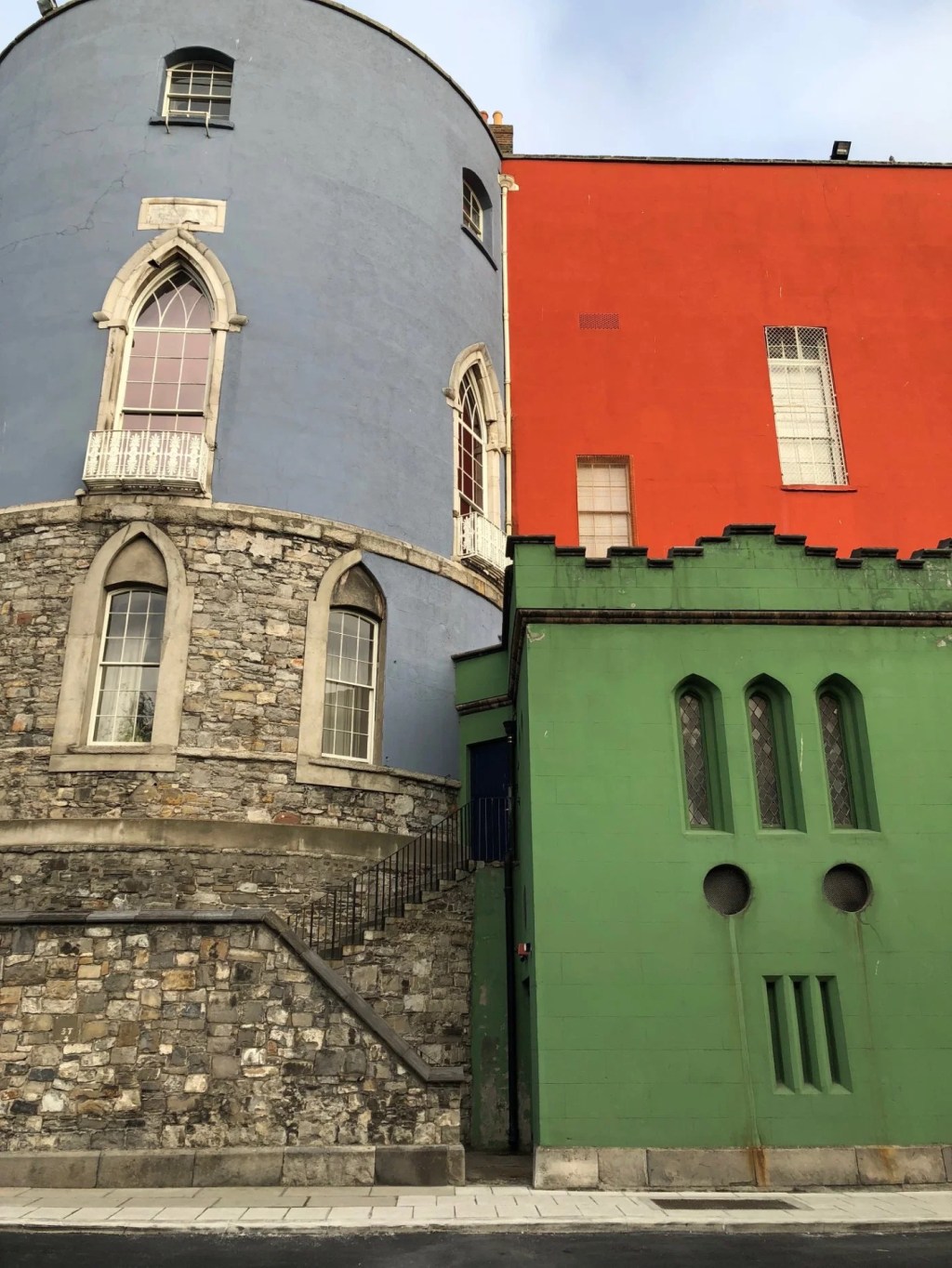
She knew when he picked the orange one that he would kill somebody. The timing and target were irrelevant, only the certainty of a fate laid bare. For he chose his blocks with painstaking selection, admitting first the yellow then, after weeks chewing over the block bin, the blue. The logical successor to yellow and blue was red, and orange—huffed the teacher—was a far cry from red.
He just looked like one of those kids. The waxy cheeks and wet red mouth—when did he lick it? she wondered, unable to account for its uncanny luster and envying the cherry shock that no gloss would get her without shriveling her lips like chilies—were perhaps cherubic by classical standards but, by today’s, chilling. He looked like a candidate for exorcism. Also, iron supplementation.
The teacher had observed all manor of demonic behavior in students past. One of her first used to seize the hermit crabs from their tank and suck on their shells until forcibly divested. Another had wanted witch’s nails for Halloween and stuck her pinky into the pencil sharpener. Everyone had a distinctive fancy, though many involved liberal applications of glue, glitter and fingers beyond finger-painting.
But this orange omen the teacher would not disregard. Hopping to, she called the boy’s parents and sat them down that afternoon to express her gravest concerns.
Knees to chins, they stared up at her from the overturned milk crates the class used for storytime. But what story she told now, and what story she hoped to prevent! The parents gawked in amazement as she concluded her report.
“Blocks?”
The teacher folded her hands under her chin. Stupefaction was to be expected, yes, but how to convince the impervious parents of the child’s subtle yet unequivocal malice? Above her the fluorescent tubes flickered, sympathetic to the ticklishness of the teacher’s predicament. Verily, she concurred, enlightenment would be no easy task. She clarified:
“If your son had chosen between, say, red and orange marbles, we would have little cause for unrest. Marbles are an innocuous toy, whereas blocks—” she shivered—“are the fetish of the self-appointed architect: he who builds up and knocks down, creates and destroys, craves and assumes the megalomanic whims of the divine!”
Mother and father exchanged a glance. The former flushed, no doubt for humiliation of having so long mistaken her child’s true nature. The teacher considered such disillusionment a humbling office and passed the poor woman a box of tissues for her recomposure.
The teacher excelled at conflict resolution.
She found it strange, then, that she wind up face to face with the cardboard box. Her files and baubles fit snugly within, and as a container it boasted rather superb dimensions, the seatbelt stretching comfortably over its belly in defense against potholes.
As she nosed through the parking lot, she threw one last look toward the classroom and perceived through the weatherproofed window the boy, block in hand, saluting her departure. Though at cruising velocity she could say for certain, she knew that this time he held the red one—the right one—and, nodding to her little convert, turned the radio high. Her timely intervention had saved a life, if complicating her own. But she would happily, and in all probability, do it again.
 K. P. F. Holmes